

F-series History
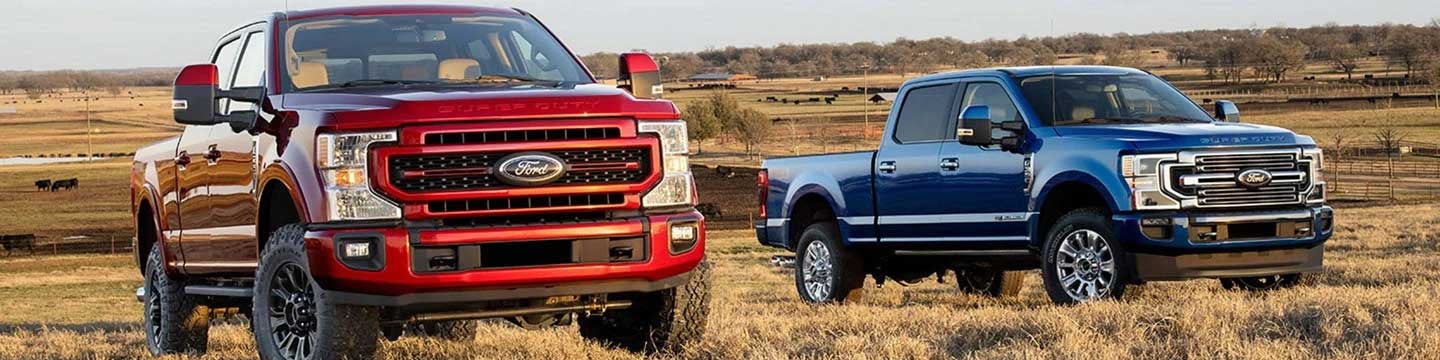
History of the Ford F-Series
In the first half of the 20th century, the United States had one of the most productive industrial and technical periods in our history as automobiles were developed to run faster and accomplish more. Ford introduced a new concept in pickup trucks that has stayed strong in the market for nearly 100 years.How it all Started
In 1948, Ford came out with the F-Series line. It started as a line of pickup trucks with 5 different body styles; they were called the F-1, F-2, F-3, F-4, and F-5. These body styles were designed to appeal to a variety of buyers, and they were all built with the idea of building a tougher truck to handle tougher jobs.The second generation brought some big changes. The F-1 became the F-100 and the F-2 and F-3 were merged into the F-250, while the F-4 became the F-350 and the production on the F-5 ended. This established the three model groups we have today.
The third generation brought other changes in design, the Styleside bed was built longer and the body lower, and the engines were exchanged for more powerful versions. Ford updated the interior for more space and comfort and finally added the F-150, which is the preferred model from the F- Series still today.
The seventh generation gave us a new design concept. Ford added a dual rear-wheel option to the F-150 in the 1980s, giving us the first dually model, which many people still enjoy today.
The Ninth Generation
During the late 80s and early 90s, Ford made more changes to the F-Series, they were given an all-new look that would set the standard for their design down the road. The hoodlines were lowered and the grilles, front bumper, and fenders were all rounded. This more modern look carried over to today’s models. The generation also marked the 75th anniversary of the F-Series so Ford released a Special Edition to commemorate the occasion with a design that had unique logos and striping.The Tenth Generation
In 1997, the F-Series was divided into to two separate and distinct categories. The F-150 was considered more of a family vehicle. While the F-250 and F-350 were then labeled as heavy-duty work trucks, two years later they would be relabeled as Super Duty trucks.The Eleventh Generation
In 2004, a new platform topped by a fully boxed-in frame and rear shocks were added to the F-150. Then in 2008, the Super Duty line was built onto a new platform with a larger grille, new headlights, and a modified cabin.The Twelfth Generation
With the twelfth generation came a whole new lineup of engines for the F-Series, new V-8s, a new 3.6L V-6 and a twin turbocharged Ecoboost became available for the line. All models featured an automatic transmission during this timeframe as well.The Thirteenth Generation
This generation featured trucks with a lighter build, but with no reduction in power because engines were becoming more efficient. The transmissions became six-speeds and new technological safety features were added.The F-Series Today
The fourteenth generation is today’s modern F-Series design. Most of the changes were related to making the interior more comfortable and exterior more stylish, but also more technologically advanced safety features were also added. This generation also introduces the latest F-150 model, the Ford F-150 Lightning as the first fully electric F-150.Come by Stanley Ford McGregor, serving McGregor, Killeen, and Waco for more details about the F- Series truck and test drive your choice today!

May not represent actual vehicle. (Options, colors, trim and body style may vary)